Jungian & Depth-Oriented Therapy
Jungian and depth-oriented psychotherapy in West Vancouver. Shadow work, dreams, archetypes, individuation. English & Farsi. Free 15-min consult.
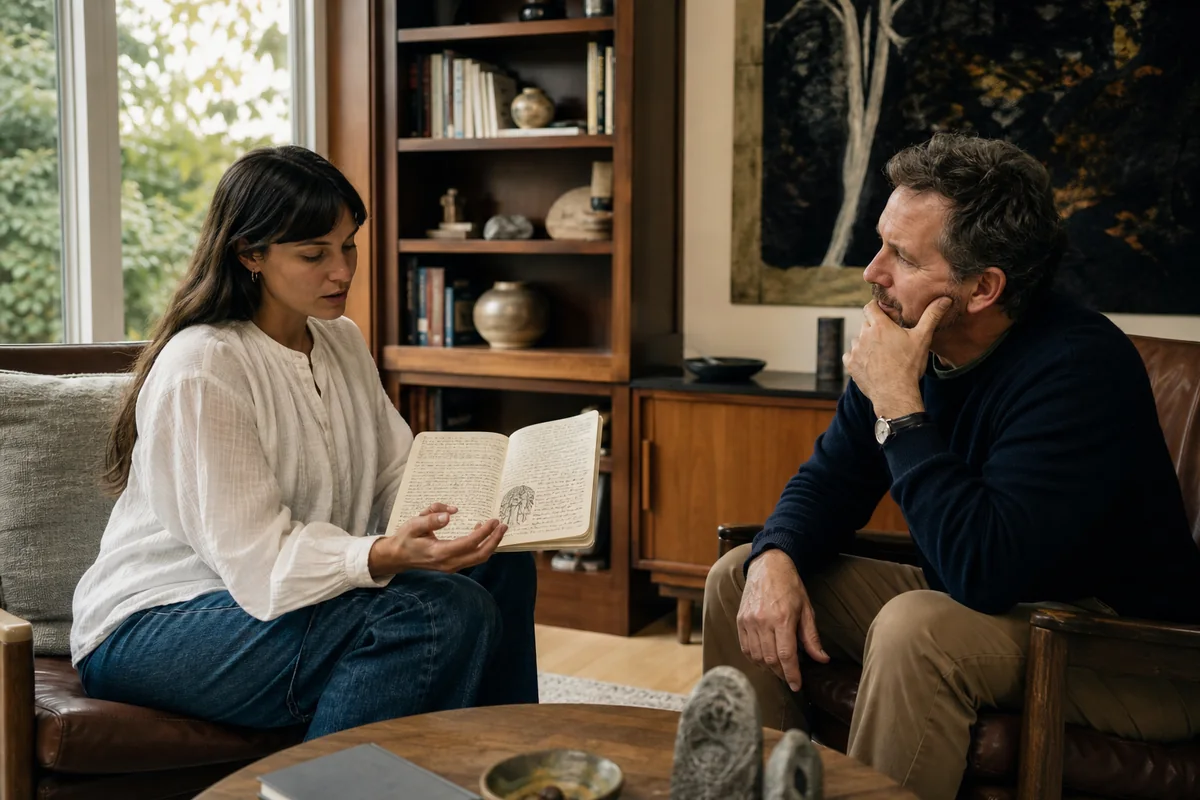
Most of what runs your life is not what you think runs your life. The work of depth psychology is to make the hidden conscious — not to control it, but to be in conversation with it.
Jungian and depth-oriented therapy is one of the oldest and richest traditions in modern psychotherapy. Founded by Carl Jung in the early twentieth century and developed since by clinicians and writers including James Hillman, Marion Woodman, James Hollis, Clarissa Pinkola Estés, and many others, it offers a way of working with the psyche that takes seriously what most rapid-symptom-reduction therapies pass over: the unconscious, the symbolic, the dream, the shadow, and the long arc of becoming a person.
At Baraka Ontology & Clinical Counselling in West Vancouver, depth-oriented work is part of our clinical signature. We don't work only in this register — for clients who need symptom-focused stabilization first, we have CBT, ACT, and somatic tools to offer — but for clients drawn to the deeper work, this is what we do well.
Available in English and Farsi, in person at our Ambleside office and online across British Columbia.
Core ideas, briefly
A few of the foundational ideas you'll encounter if you do this work with us:
- The unconscious. Jung's central claim is that most of psychic life happens below conscious awareness. We are driven by patterns, complexes, and dynamics we did not choose and largely cannot see. The work is to bring more of this material into conscious relationship.
- The shadow. The parts of yourself you have disowned — usually because they were unwelcome in your family, your culture, or your earlier life. The shadow shows up in projections (the thing you hate in others is often what you cannot acknowledge in yourself), in self-sabotage, and in the energy you don't have access to.
- Archetypes. Recurring psychological patterns that show up across cultures and across history — the Mother, the Hero, the Trickster, the Wise One, the Child. Recognizing the archetypal layer of personal experience often reframes private suffering as participation in something much older.
- Individuation. The lifelong project of becoming the particular self you are, distinct from the family, culture, and roles you were handed. Individuation is not self-improvement. It is the slow, often painful integration of all of who you are.
- Dreams. Treated by depth therapy not as random brain noise but as direct, symbolic communication from the unconscious. Working with dreams is one of the most powerful tools in the depth tradition.
- The numinous. The sense of meaning, mystery, or sacred resonance that some experiences carry. Depth therapy makes room for this without prescribing any particular religious or spiritual framework.
When depth-oriented therapy is the right fit
Depth work isn't for everyone. It's the right approach when:
- You've done some therapy before and felt that something deeper was being missed
- You're drawn to questions of meaning, purpose, and identity
- You're in a major life transition — career, relationship, midlife, immigration — that feels bigger than just "a problem to solve"
- You've achieved significantly externally and feel internally hollow
- You've engaged with depth literature — Jung, Hillman, Hollis, Estés, Tolle, Rumi, Hafez — and felt resonance
- You dream vividly and want to work with what your dreams are bringing
- You're carrying intergenerational, cultural, or symbolic material that feels bigger than just "your stuff"
- You're comfortable with slow work, with not knowing, and with sitting in questions
It's not the right fit if you're in acute crisis and need stabilization first (we'll do that work first), if you want a structured 8-week protocol with measurable outcomes (we have CBT-leaning options), or if anything that sounds even slightly philosophical or symbolic is uncomfortable for you.
What sessions actually look like
Depth-oriented sessions are conversations, but they have a particular quality. We pay attention to:
- The patterns that keep repeating in your life
- The dreams that keep coming
- The symbols, images, and metaphors that emerge in our conversation
- The parts of yourself you've disowned, and the energy locked up in keeping them at bay
- The longer story of who you've been, who you're becoming, and what your life is asking of you
Sessions are 50 minutes. Most depth-oriented clients work weekly for the first phase and shift to biweekly later. The work tends to unfold over months and years rather than weeks; many clients describe a slow but profound deepening over time.
Depth work in the Persian-Iranian tradition
Persian culture has one of the richest depth-poetic traditions in human history — Rumi, Hafez, Attar, Sa'di — and our Iranian-Canadian clients often find that depth-oriented therapy has a quality of conversation they have been missing in English-language therapy that doesn't draw on this. We work in Persian with full attention to this dimension.
- (See: Persian/Farsi-Speaking Therapist → Counselling for Iranian Immigrants →.)
Begin
Book a free 15-minute consultation — phone or video — to ask questions before scheduling a session.
- Book your free consult → Or call (236) 455-6306 Email contact@barakaocc.com
1571 Bellevue Avenue, Suite 210, West Vancouver, BC V7V 1A6 — or online anywhere in BC.
Frequently asked questions
How do I start with Jungian / Depth Therapy?
Start with a consult so the care team can understand fit, urgency, language, modality, and next steps.
Is this page medical advice?
Baraka pages are educational and navigation-focused; they do not replace diagnosis, crisis support, or emergency care.