Grief & Loss Counselling in West Vancouver
Compassionate grief counselling in West Vancouver. Bereavement, complicated grief, ambiguous loss, immigration grief. English & Farsi. Free consult.
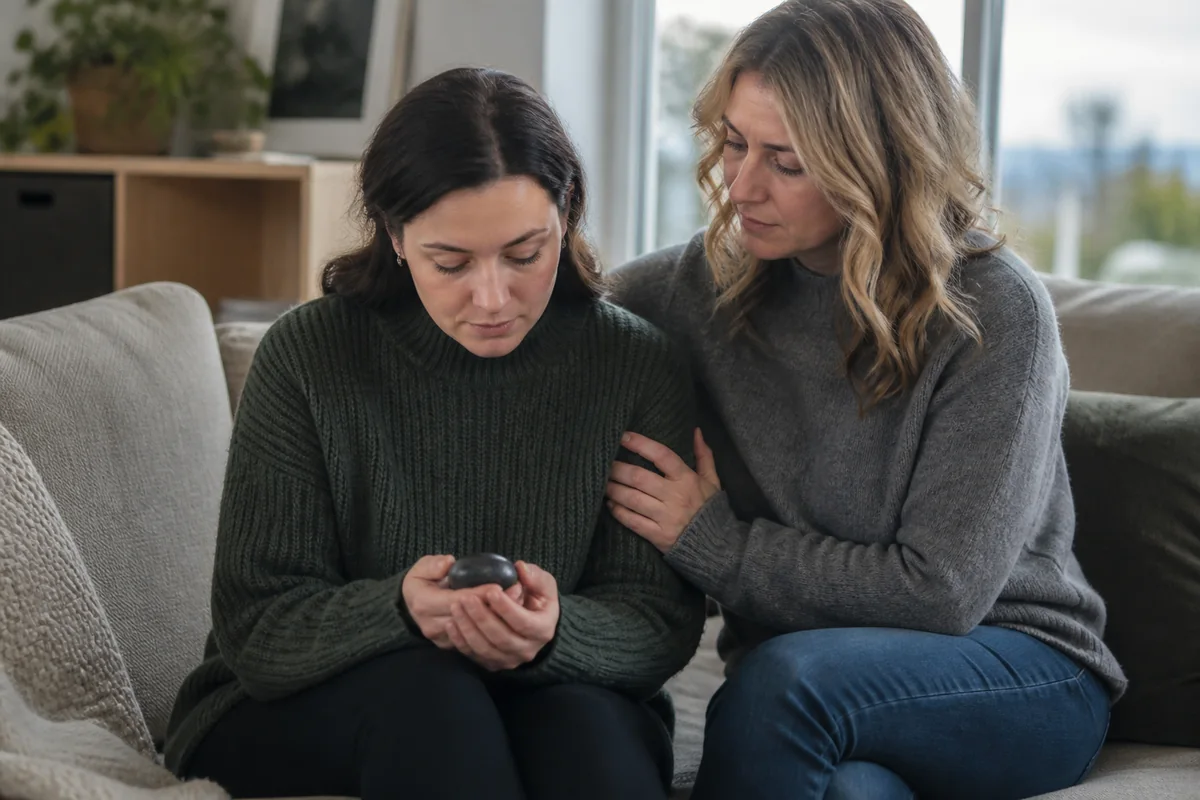
Grief is not something you get over. It is something you learn to carry.
Some forms of grief our culture knows how to hold — the death of a parent, a spouse, a friend. Even then, the public permission for grief tends to expire long before the grief does. After three weeks people stop asking, and you're left with months of not-yet-metabolized loss and a strong feeling that you're supposed to be further along by now.
Other forms of grief our culture doesn't know how to hold at all. The miscarriage no one knew about. The slow loss of a parent to dementia who is still alive. The end of a marriage you mourn alongside the person you're divorcing. The country you can't go home to. The version of yourself that this illness took. The friendship that simply faded. These are real losses, and they are often the hardest to grieve, because there's no funeral, no casserole, no public space for the weeping.
At Baraka Ontology & Clinical Counselling in West Vancouver, we make space for all of it. Our therapists are RCC-credentialed, trained in evidence-informed grief and bereavement work, and equipped with the depth-oriented sensibility to honour grief as one of the most important — and most natural — experiences a human being will have. We see clients in our Ambleside office and online across British Columbia, in English and Farsi.
Kinds of grief we work with
- Bereavement after death — partner, parent, child, sibling, friend, mentor.
- Anticipatory grief — when a loved one is dying and you are grieving while they are still here.
- Complicated or prolonged grief — when grief has stayed acute for over a year and is interfering with your ability to live.
- Pregnancy loss and infant loss — miscarriage, stillbirth, neonatal loss, abortion grief.
- Ambiguous loss — the loved one with dementia who is and is not still here. The estranged child who is alive but unreachable. The relationship that has not formally ended but has effectively died.
- Loss of identity — through illness, disability, retirement, divorce, the end of a long career, the empty nest.
- Loss of pet companions — which our culture often dismisses but which can be one of the most profound losses a person experiences.
- Immigration grief — the loss of country, language, professional identity, family, geography, food, weather, the smell of the air. This grief often goes underground for years before it surfaces, sometimes as depression, sometimes as a sudden flooding when something small triggers the homeland.
- Loss of a future — the diagnosis that closed a door, the betrayal that erased a chapter, the decision that, in retrospect, cost you more than you knew.
Grief is not depression, but it can become entangled with it
It is normal — even healthy — to feel terrible after a major loss for an extended period. Crying, exhaustion, lost appetite, withdrawal from social life, difficulty concentrating, even feeling that life has lost its meaning for a season — these are grief, not pathology, and they don't necessarily need treatment.
What we look for is whether the grief has become stuck. Signs of that include:
- A year or more after the loss, the acute pain is unchanged
- You cannot tolerate any reminder of the lost person and have organized your life around avoidance
- You feel you cannot live without them, in a way that includes wishes to die
- You feel guilty for any moment of joy or recovery
- You are using alcohol, work, food, or numbness to manage what you cannot face
- Your relationships, work, or basic functioning have not begun to return after the first year
If any of these resonate, what may be needed is not just time — it's company. Grief work isn't about helping you stop missing the person. It's about helping the missing become bearable, and helping you build a life that includes the loss rather than collapsing under it.
How we work with grief at Baraka
We don't follow the famous "five stages." That model was originally about the dying, not the bereaved, and it has been broadly retired by the field. Real grief is non-linear, recursive, and idiosyncratic.
What we offer instead:
- A relationship in which your grief is welcome — without time limits, without comparison, without the impatient kindness of friends who would prefer you to be okay by now.
- Continuing-bonds work — building, with you, a way of staying in relationship to the person you've lost that doesn't require their physical presence. Their voice doesn't have to leave you. The relationship transforms; it doesn't end.
- Meaning reconstruction — when a death (or other major loss) shatters the assumptive world you'd been living in, the work isn't to "get over it" but to slowly build a new sense of how the world works that can include what happened.
- Somatic and embodied grief work — grief lives in the body. Many of our clients describe a literal weight on the chest, a tightness in the throat, an exhaustion in the bones. We work with that.
- Ritual, image, and symbolic work — grief responds to meaning-making in ways that talking sometimes cannot reach. We may invite letter-writing, image work, or simple practices that honour the loss.
- Trauma processing when the loss was traumatic — sudden death, violent death, the loss of a child, perinatal loss. These often need trauma-informed support alongside grief work. (See our Trauma Therapy page →.)
Grief in the Persian-Iranian community
Persian culture has rich and beautiful traditions around grief. The forty days. The poetry. The collective gathering. The food prepared by neighbours. The presence of the lost beloved in language and song.
For Iranian-Canadians, especially those without large family networks here, much of this is missing. The funeral happened in Tehran while you were in West Vancouver and could not travel. The community of mourners is in another country. The grief that should have been held by hundreds gets borne by one. We understand this kind of loss, and we work with it.
We also work with the diaspora-specific grief of not being able to mourn properly — the regret of missing parents' final years, the funeral attended by Skype, the unspoken knowledge that you may not see your home country again in this life. This is profound grief, and it deserves a space.
In Farsi, with a therapist who shares the culture, much of what would otherwise need translation can simply be lived. (See: Farsi-speaking therapist page →.)
What therapy will actually look like
Grief therapy at Baraka is paced gently. There is no rush. Most clients begin with weekly sessions
and continue at that pace for the first few months, often shifting to biweekly later as the work consolidates.
You won't be told what stage you're in. You won't be given homework that turns grief into a checklist. You'll be asked, in the most caring way we know, to come close to what hurts — accompanied — and to let the grief be what it is, for as long as it needs to be that.
Sessions are 50 minutes, in person at our Ambleside office or by secure video.
Frequently asked questions
How soon after a loss should I come? Whenever you want. Some people come immediately for support. Others come a year or two later when the social scaffolding has fallen away and they realize they're more stuck than they thought.
What if I don't cry in sessions? Grief doesn't require tears. Some of the deepest grief work happens in silence, or in fragments of memory and image, or in the body.
Can children's grief be supported here? We work with adults; for children we can refer to specialized child-grief practitioners on the North Shore.
Will my benefits cover this? Most BC extended health plans cover sessions with a Registered Clinical Counsellor. We provide receipts. See Insurance & Fees →.
Is grief work culturally adapted in Farsi? Yes. Our Persian-speaking clinicians work natively in cultural and linguistic context.
Begin
Grief deserves company. Book a free 15-minute consultation — phone or video — and meet a Baraka therapist before committing to ongoing work.
- Book your free consult → Or call (236) 455-6306 Email contact@barakaocc.com
1571 Bellevue Avenue, Suite 210, West Vancouver, BC V7V 1A6.
Frequently asked questions
How do I start with Grief?
Start with a consult so the care team can understand fit, urgency, language, modality, and next steps.
Is this page medical advice?
Baraka pages are educational and navigation-focused; they do not replace diagnosis, crisis support, or emergency care.