
Sleep Architecture — A Clinical Guide for Adults Who Have Stopped Sleeping Well
A clinical guide to sleep — what's actually happening when you can't sleep well, what predicts good sleep, and what helps when basic advice has stopped working.
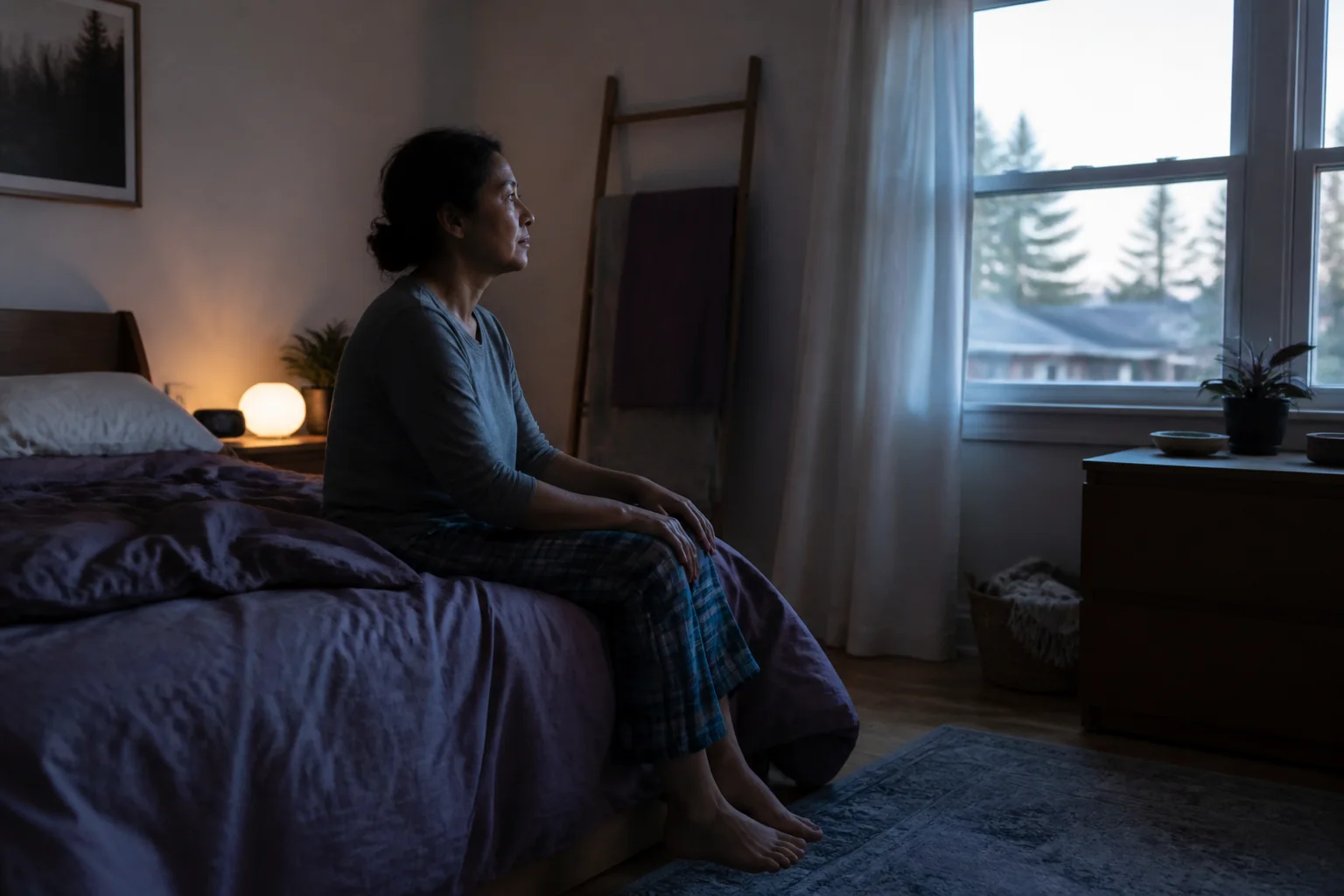
A patient came to me last year and said something I have heard many times: I have read every sleep book. I have tried every supplement. I have done sleep restriction therapy. I have a strict bedtime routine. I have eliminated screens, caffeine, alcohol. And I am still waking at 3 a.m. and lying there until 5 a.m. for the third year in a row.
This is the place where most adult sleep problems become clinical territory rather than self-help territory. Basic sleep hygiene works for many people. For people whose sleep has been disrupted for years, who have tried the basics, and who are still not sleeping well, something else is going on — and that something else usually has multiple dimensions that benefit from integrated assessment.
This article is for the adults whose sleep has stopped responding to standard advice.
What good sleep actually is
Sleep is not a single uniform state. It cycles through stages — light sleep, deep sleep (slow-wave sleep), REM sleep — across the night. Each stage does specific work:
Deep sleep (mostly in the first half of the night). Physical recovery, immune system maintenance, memory consolidation, hormonal regulation. Growth hormone is released during deep sleep. Glymphatic clearing of brain metabolic waste happens in deep sleep.
REM sleep (mostly in the second half of the night). Emotional processing, memory consolidation, dream activity, certain forms of cognitive integration.
Light sleep transitions. The connective tissue between deeper stages.
Good sleep cycles through these stages multiple times across the night, with deep sleep dominating early and REM dominating later. Restorative sleep depends not just on total sleep time but on architecture — getting enough of each stage in the right order.
When sleep is disrupted, the architecture is usually what's broken, even when total sleep time looks adequate. People with fragmented sleep can sleep eight hours and feel exhausted because the architecture has not held.
What disrupts sleep architecture
Several common categories:
Anxiety and nervous system dysregulation. A nervous system that has not been able to come down to ventral vagal cannot enter and sustain deep sleep. The sympathetic activation persists into the night. (See: Nervous System Regulation →.)
Hormonal disruption. Cortisol rhythm dysregulation, perimenopausal hormonal fluctuation, thyroid dysfunction, and sex hormone shifts all disrupt sleep architecture. The 3 a.m. waking is often hormonal.
Blood sugar instability. Drops in blood glucose during the night trigger adrenaline release and waking. Many of my patients with chronic 2-4 a.m. waking are actually experiencing nocturnal hypoglycemia.
Alcohol use. Even modest evening alcohol fragments sleep architecture significantly. Alcohol may help you fall asleep; it consistently disrupts the second half of the night.
Caffeine timing and metabolism. Caffeine has a 5-6 hour half-life on average, longer in slow metabolizers. Caffeine after noon disrupts sleep architecture in many people, even when subjective sleep quality seems fine.
Sleep apnea. Often unrecognized. Affects roughly 25% of adult men and 10% of adult women. Symptoms include loud snoring, witnessed pauses in breathing, morning headache, daytime sleepiness despite adequate time in bed.
Restless legs syndrome and periodic limb movement disorder. Often associated with iron deficiency. Can severely fragment sleep without the patient consciously remembering the disruption.
Medications. Many common medications affect sleep — some obvious (stimulants, certain antidepressants), some less obvious (some blood pressure medications, statins, certain pain medications).
Light exposure patterns. Particularly the timing of bright light. Modern indoor life often inverts the natural light pattern that supports circadian rhythm.
Underlying mental health conditions. Depression often produces early-morning waking with inability to return to sleep. Anxiety often produces difficulty falling asleep and frequent waking. PTSD produces nightmare-related sleep disruption.
Chronic pain. Both directly disrupts sleep and produces autonomic dysregulation that compounds the disruption.
What good integrative sleep care looks like
When standard advice has not worked, comprehensive sleep care typically includes:
Identifying contributing factors. A thorough sleep history covers timing, awakenings, sleep environment, light exposure, caffeine and alcohol, medications, stress patterns, mental health, and physical symptoms. Many sleep concerns are clarified just by careful history-taking.
Targeted lab assessment. Sometimes ferritin, TSH, vitamin D, magnesium, fasting glucose, sex hormones if indicated. The assessment is calibrated to what the history suggests.
Sleep study consideration where indicated. For patients with suspected sleep apnea or other primary sleep disorders, referral for polysomnography is often the right next step. Naturopathic care does not replace conventional sleep medicine for primary sleep disorders.
Architecture-focused intervention. Different from generic sleep hygiene. Targeted to the specific disruption pattern. The patient who can't fall asleep needs different intervention than the patient who falls asleep fine and wakes at 3 a.m.
Cognitive Behavioural Therapy for Insomnia (CBT-I). The strongest evidence-based intervention for chronic insomnia. We refer to qualified providers; not all therapists do CBT-I and the protocol matters.
Targeted supplementation when indicated. Magnesium glycinate or threonate, melatonin in correct doses (most over-the-counter doses are too high), specific botanicals for specific patterns. Used precisely.
Underlying condition treatment. Hormonal imbalances, blood sugar, thyroid, iron — addressed where present.
Lifestyle architecture. Light exposure, exercise timing, eating timing, alcohol reduction, caffeine timing. The basics, applied with precision and sustained over time.
Mental health work in parallel. When anxiety, depression, or trauma are part of the picture, addressing them in therapy is part of the work.
Sometimes medication. Short-term sleep medication has a place, particularly during transitions. Long-term sleep medication is generally not the answer for chronic insomnia and we coordinate with prescribing physicians on appropriate use.
Particular populations
Perimenopausal women. Sleep disruption is one of the earliest and most common perimenopausal symptoms. Hormonal contributors are real and address-able. Hormone therapy, where appropriate, can transform sleep significantly. (See: Women in Midlife →.)
Postpartum mothers. Sleep disruption in the postpartum year is unavoidable in some respects and addressable in others. The recovery from postpartum sleep deprivation can extend two years or more if not actively supported.
Burned-out professionals. Sleep is often the first thing to go in burnout and the last thing to return. Active sleep work is foundational burnout recovery. (See: Burnout Recovery Workbook →.)
Trauma survivors. Sleep disruption from PTSD has specific clinical features and benefits from trauma-informed care.
Adults with anxiety. When anxiety is the primary driver, treating the anxiety usually improves sleep more than sleep-specific interventions alone.
When to come in
If your sleep has been disrupted for more than a few months despite reasonable efforts, please consider integrative assessment. The work is real and the right combination of interventions usually helps.
Naturopathic care at Baraka covers comprehensive sleep assessment alongside the broader integrative picture.
- Book a consultation with Dr. Rosita Fatemi → Or call (236) 455-6306 Email contact@barakaocc.com