
Hormonal Health for Women — An Integrative Approach
An integrative MD-ND look at women's hormonal health across life stages — what's normal, what's clinical, and what helps when conventional care has plateaued.
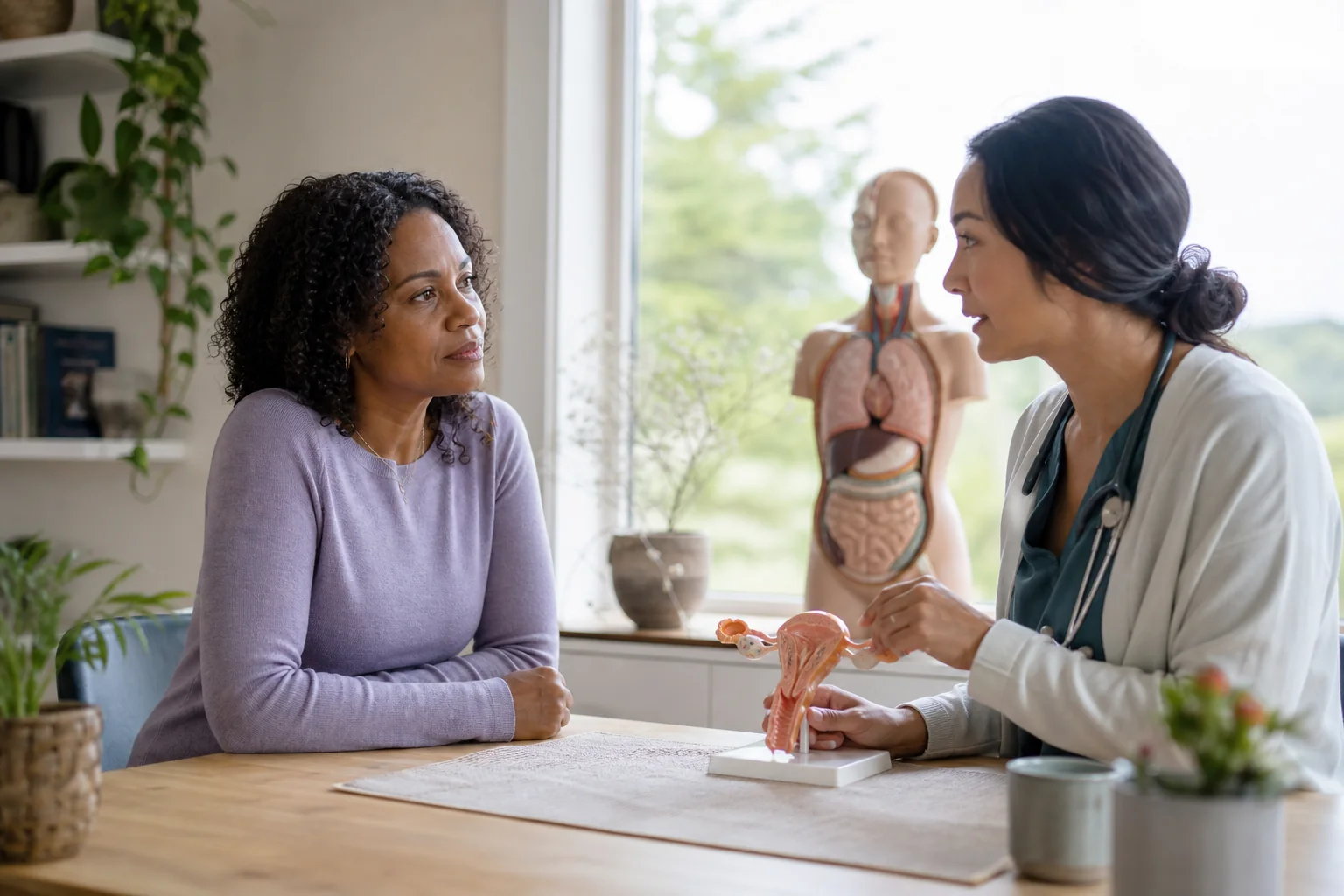
Most women I meet in my practice have at some point been told by a physician that their bloodwork is normal and there is nothing to worry about. Many of them know their bloodwork is normal. They also know that something is not right — that their cycles have shifted, that their mood is not what it was, that their sleep is fragmented, that their energy has not returned to baseline since whatever life event preceded the change.
The gap between your bloodwork is normal and something is genuinely wrong is where a great deal of women's health care is missing in the conventional system. This article is about the integrative MD-ND approach to women's hormonal health — what is actually being assessed, what intervention can include, and where the line between conventional medicine and integrative care actually sits.
I write this from a particular position: I trained first as a conventional physician (MD, Tehran University of Medical Sciences) and practiced family medicine for over a decade before completing my Doctor of Naturopathic Medicine. I am comfortable with both worlds. I refer patients to specialists when conventional care is the right path. I also know what the conventional model often misses, and where integrative care can do meaningful additional work.
The life-stage framework
Women's hormonal health changes substantially across life stages, and the issues that present at each stage have specific patterns:
Reproductive years (roughly 15-40). Cycle regularity, premenstrual symptoms, fertility, pregnancy and postpartum recovery, contraceptive considerations.
Perimenopause (typically 40-55). Hormonal fluctuation increasing in irregularity, mood and sleep disruption often new-onset or intensified, gradual transition toward menopause.
Menopause and post-menopause (typically 50+). The cessation of cycles, the new hormonal baseline, long-term health considerations including bone, cardiovascular, cognitive, and sexual health.
Each of these life stages has typical concerns that warrant integrative attention.
Reproductive years
Common presentations:
PMS and PMDD. Most women experience some premenstrual changes; significant mood, anxiety, or physical symptoms in the luteal phase warrant assessment. Premenstrual Dysphoric Disorder (PMDD) is a clinical condition affecting roughly 3-8% of menstruating women and benefits from specific intervention.
Polycystic Ovary Syndrome (PCOS). Affects roughly 10% of reproductive-age women. Often diagnosed clinically (irregular cycles, hyperandrogen symptoms, insulin resistance) and benefits from integrative care that addresses metabolic, hormonal, and lifestyle dimensions together.
Endometriosis. Frequently underdiagnosed, often poorly managed in conventional care. Benefits from integrative approach that combines pain management, hormonal support, anti-inflammatory dietary architecture, and sometimes coordinated specialist care.
Cycle irregularity. Multiple causes — thyroid, PCOS, hyperprolactinemia, stress-related amenorrhea, perimenopause, others. Workup matters.
Fertility concerns. Naturopathic care alongside reproductive medicine has substantial evidence for supporting fertility outcomes, particularly for couples with unexplained infertility, recurrent pregnancy loss, or endometriosis-related infertility.
Postpartum recovery. The first two years postpartum involve significant hormonal recalibration. Naturopathic care can support thyroid function, iron and nutrient repletion, mood, and sleep through this transition.
Perimenopause
The transition years deserve their own focus because they are widely under-addressed in conventional care:
Why perimenopause goes under-treated. Perimenopause has been culturally minimized for decades. Symptoms are often dismissed by physicians who themselves have not received adequate training in this transition. Women learn to expect to be told they are imagining or exaggerating their symptoms. They are not.
Common perimenopausal presentations. Cycle irregularity (often shorter cycles initially, then irregular and longer), hot flashes and night sweats, sleep disruption, new or intensified anxiety, mood lability, brain fog and cognitive changes, libido shifts, body composition changes, joint discomfort, vaginal and urinary changes.
The hormonal picture. Perimenopause is not a steady decline; it is increasingly erratic hormonal fluctuation, often with peaks of estrogen higher than reproductive years, alongside declining progesterone and eventually declining estrogen. The fluctuation itself drives many symptoms.
What integrative care offers. Targeted nutrient support for the transition (B vitamins, magnesium, omega-3s, vitamin D), specific botanical support for documented symptoms (different botanicals for hot flashes vs. mood vs. sleep), dietary architecture for cycle stability, sleep architecture support, sometimes coordinated hormone therapy with the patient's physician, ongoing cycle tracking and education.
A note on hormone therapy. Menopausal hormone therapy was incorrectly demonized for two decades following misinterpretation of the Women's Health Initiative results in 2002. Subsequent re-analysis has been more nuanced: for many women, particularly those starting in early menopause for symptom management, the risk-benefit calculation is favourable. The conversation with a knowledgeable physician is worth having. Naturopathic care complements rather than replaces this conversation.
Menopause and beyond
The post-menopausal years involve:
Long-term hormonal baseline. Symptoms often improve substantially after the transition, but the new baseline involves lower estrogen with implications for bone, cardiovascular, cognitive, and sexual health.
Bone health. The accelerated bone loss in early menopause is real and addressable. DEXA scans, calcium and vitamin D assessment, weight-bearing exercise, sometimes medication. Integrative care emphasizes the lifestyle and nutritional dimensions alongside conventional management.
Cardiovascular risk. Pre-menopausal estrogen had protective effects on cardiovascular health; the post-menopausal years involve increased cardiovascular risk that warrants active attention.
Cognitive health. Estrogen has neuroprotective effects; the post-menopausal years are a period of increased focus on cognitive health through lifestyle, nutrition, and where appropriate, hormonal intervention.
Sexual and pelvic health. Vaginal atrophy, urinary symptoms, libido changes — these are addressable and often under-treated.
What an integrative women's health visit covers
The Initial Naturopathic Visit for women's health typically includes:
- Comprehensive cycle and reproductive history
- Symptom mapping (often using cycle tracking)
- Targeted hormonal assessment (timed appropriately to cycle for menstruating women)
- Thyroid panel
- Nutrient status (iron, B12, folate, vitamin D, magnesium)
- Metabolic markers
- Inflammatory markers where indicated
- Discussion of conventional and integrative options
- Coordination with the patient's family physician or specialist
Specific testing depends on the clinical picture and is calibrated to what is actually needed.
What treatment may include
Targeted nutrient repletion. For documented deficiencies, in therapeutic doses.
Botanical support. Specific herbs for specific patterns. Cimicifuga for hot flashes, vitex for cycle regulation, rhodiola for cortisol, others as indicated.
Dietary architecture. For blood sugar stability, hormonal support, anti-inflammatory effects.
Lifestyle support. Sleep, exercise (including resistance training, which is particularly important for women across life stages), stress management.
Acupuncture. Substantial evidence for hot flashes, premenstrual symptoms, and fertility support.
Coordinated medical care. For conditions requiring specialist or pharmaceutical intervention.
Mental health support. Often the hormonal and emotional are intertwined, and care that addresses both works better than either alone. Many of our women's health patients are also working with our therapy team.
When to come in
If you are at any life stage and have hormonal questions that conventional care has not fully addressed, please reach out. The Free Introductory Naturopathic Consultation is a no-pressure way to explore whether integrative care fits your situation.
- Book a free introductory consultation with Dr. Rosita Fatemi → Or call (236) 455- 6306 Email contact@barakaocc.com